Paint Protection
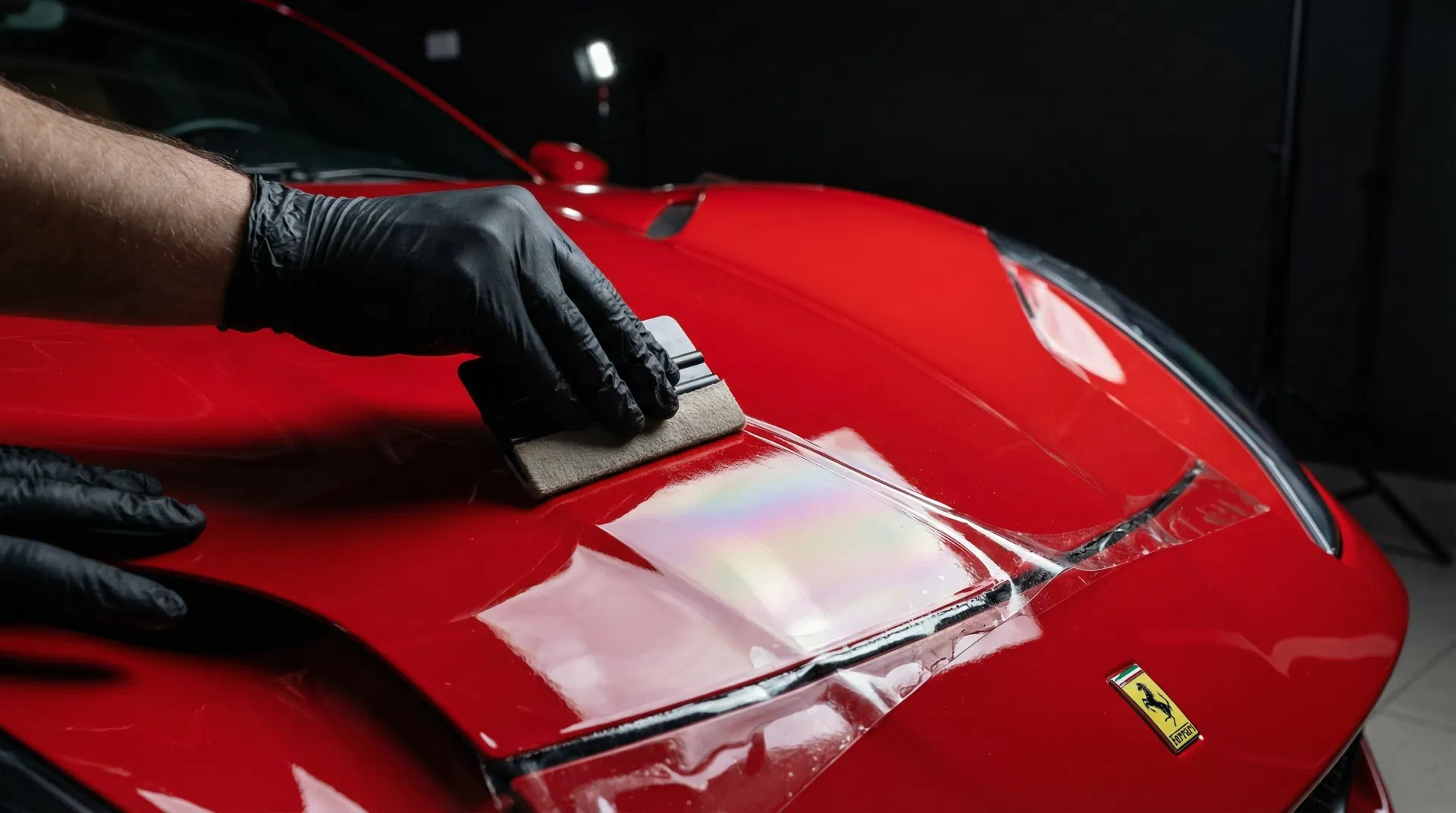
Paint protection film is the only product that physically stops rock chips, road debris, and scratches from reaching your paint. Unlike ceramic coating (which adds hardness and chemical resistance) or wax (which adds a sacrificial gloss layer), PPF is a thick, self-healing urethane film that absorbs impacts and protects the surface underneath.
The question is not whether PPF works — it does, and the results are dramatic. The question is how much of your car needs it. Full front coverage protects the most vulnerable panels. Full body coverage protects everything. The price difference between the two can be $3,000 to $5,000, so the decision deserves careful thought.
Here is what each level of coverage includes and what it costs in the Chicago area for a midsize sedan or SUV:
| Coverage Level | What Is Included | Sedan Price | SUV/Truck Price |
| Partial Front | Front bumper, partial hood (24"), headlights | $800–$1,500 | $1,000–$1,800 |
| Full Front | Full hood, full front bumper, fenders, mirrors, headlights | $1,500–$3,500 | $2,000–$4,000 |
| Track Package | Full front + rocker panels, A-pillars, rear bumper | $3,000–$5,000 | $3,500–$5,500 |
| Full Body | Every painted surface on the vehicle | $5,000–$8,000 | $6,000–$10,000+ |
Prices vary based on the film brand (XPEL Ultimate Plus, STEK DYNOshield, 3M Pro Series), the complexity of the vehicle's body lines, and whether the car is new or requires paint correction before installation.
To make an informed decision about coverage, it helps to understand where your car is most likely to get hit:
Front bumper: highest risk. The front bumper takes the most abuse from road debris, bugs, and parking lot incidents. It is the first thing that contacts anything in front of the car. Protecting the front bumper is the minimum level of PPF that makes sense. Hood: very high risk. Highway driving kicks up rocks and debris that hit the hood constantly. The leading edge of the hood is especially vulnerable. A full hood wrap prevents the chips and pitting that accumulate over years of highway driving. Fenders and mirrors: high risk. Side spray from other vehicles, especially in winter when roads are wet and salted, sends debris into the fenders and mirrors. These panels also get hit by rocks kicked up by the car's own front tires. Rocker panels: moderate-to-high risk. The lower body panels along the sides of the car get peppered by debris from the road surface. This is especially true on trucks and SUVs with larger tires that throw more material. Rocker panel protection is included in the Track Package for this reason. Doors: moderate risk. Door damage comes primarily from parking lots — other car doors, shopping carts, and careless pedestrians. Highway debris occasionally hits doors, but less frequently than the front end. Full body PPF protects doors; partial coverage does not. Rear bumper and trunk: low-to-moderate risk. The rear of the car sees less debris impact than the front, but it is vulnerable to scratches from loading and unloading cargo, and from parking lot incidents. Rear bumper protection is included in the Track Package.Full front PPF protects the panels that absorb 60 to 70 percent of all road debris impacts. For most Chicago drivers, this is the coverage level that makes the most financial sense. Here is why:
It covers the highest-risk areas. The hood, bumper, fenders, mirrors, and headlights are where the vast majority of chips and scratches occur. Protecting these panels prevents the most common and most visible damage. The cost-to-protection ratio is excellent. At $1,500 to $3,500, full front PPF costs roughly 40 to 50 percent of full body coverage while protecting the areas that matter most. You are getting the majority of the benefit at a fraction of the total cost. It pairs perfectly with ceramic coating. A common and highly effective combination is full front PPF plus ceramic coating on the rest of the vehicle. The PPF handles physical impacts on the front end, while the ceramic coating protects the sides and rear from UV damage, chemical staining, and light scratches. This combination typically costs $2,500 to $5,000 total — less than full body PPF alone — and provides comprehensive protection. Warranty coverage is the same. Whether you get full front or full body, the film carries the same warranty (typically 10 years for premium films like XPEL Ultimate Plus). The warranty covers yellowing, cracking, peeling, and bubbling.Full body PPF is a significant investment, but there are situations where it is the right choice:
Luxury and exotic vehicles. If you are driving a Porsche, BMW M-series, Mercedes-AMG, or any vehicle worth $80,000 or more, the cost of repainting a single panel can exceed $2,000. Full body PPF at $6,000 to $10,000 is insurance against paint damage that would cost far more to repair. The math works in your favor. New cars you plan to keep for 7+ years. If you are buying a car you intend to drive for a long time, full body PPF preserves the paint in showroom condition for the life of the film. When you eventually sell or trade it in, the paint will look years newer than comparable unprotected vehicles. Cars that park in tight urban spaces. If you park on Chicago streets, in tight parking garages, or in busy lots where door dings and shopping cart scratches are a daily risk, full body PPF protects every panel from these hazards. Full front coverage does not help with a door ding from the car parked next to you. Vehicles with expensive or rare paint. Some factory paint colors cost $5,000 to $10,000 as options (looking at you, Porsche and BMW Individual colors). Protecting a $7,000 paint job with $8,000 of PPF makes more sense than risking a respray that may never match perfectly. Lease vehicles where you want zero wear. Lease-end inspections charge for every chip, scratch, and ding. Full body PPF can save you thousands in lease-end charges, especially on luxury leases with strict return standards.One of PPF's most impressive features is self-healing technology. When the film gets a light scratch — from a fingernail, a branch, or a car wash brush — the scratch disappears when exposed to heat. On a warm Chicago summer day, minor scratches heal themselves as the car sits in the sun. In winter, pouring warm water over a scratch will trigger the healing.
This feature works the same on full front and full body installations. It means the film stays looking clean and clear for years, even with daily driving. The self-healing layer is what separates modern PPF from the thick, orange-peel films of the past.
For most Chicago drivers, full front PPF combined with ceramic coating is the best overall protection package. It covers the highest-risk areas with physical film, protects the rest of the car with chemical and UV resistance, and costs less than full body PPF alone.
If you drive a luxury vehicle, park in high-risk areas, or simply want maximum protection, full body PPF is the ultimate choice. It is the closest thing to making your paint invincible.
Not sure which option is right for your car? [Get a free quote](/contact) and we will walk you through the options based on your vehicle, your driving habits, and your budget. We never upsell — we recommend what actually makes sense for your situation.
---
Premium paint protection film lasts 8 to 12 years with proper care. Most top-tier films (XPEL Ultimate Plus, STEK DYNOshield, 3M Pro Series) carry a 10-year manufacturer warranty against yellowing, cracking, peeling, and bubbling. The film's self-healing properties remain active throughout its lifespan.
Yes, and we recommend it. Applying ceramic coating over PPF adds hydrophobic properties, makes the film easier to clean, and enhances the gloss. The ceramic coating also provides an additional layer of UV protection that helps the film last longer. We offer combination packages that include both PPF and ceramic coating at a bundled price.
Modern PPF is virtually invisible when professionally installed. The film is optically clear and does not change the color or depth of your paint. In fact, many customers say their car looks better with PPF because the film adds a subtle gloss. Matte and satin finish films are also available for vehicles with matte paint.
Partial front (bumper and partial hood) is a good entry point if budget is a concern. However, full front coverage is a significantly better value because it protects the entire hood, fenders, and mirrors — areas that see real damage on Chicago highways. The price difference between partial and full front is typically $700 to $1,500, and the additional protection is well worth it.

